When sourcing shoes from China, finding suppliers is usually the easy part. The real challenge comes after placing an order — keeping shoe quality consistent and making sure your products meet your market requirements.
In this guide, we’ll walk you through shoe quality standards, how shoe QC actually works in China, what to check, common defects, and more cost-effective options to handle shoe QC.
What does shoe quality control include?
Shoe QC typically covers material inspection, in-process checks during production, and final inspection before shipment. The goal is to ensure consistent quality across the entire bulk order, including appearance, workmanship, and durability, while also meeting relevant safety and compliance requirements.
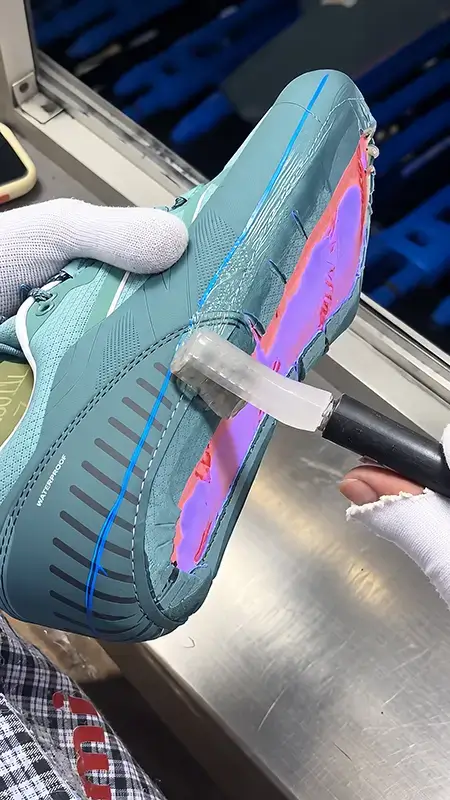
For structurally simple footwear such as flip-flops and slides, quality inspection is usually straightforward. However, complex sneakers require closer checks on areas like stitching, sole bonding, glue application, and left-right symmetry. This is especially important for branded footwear, where bulk order consistency and attention to detail are critical.
What are quality standards in the footwear industry?
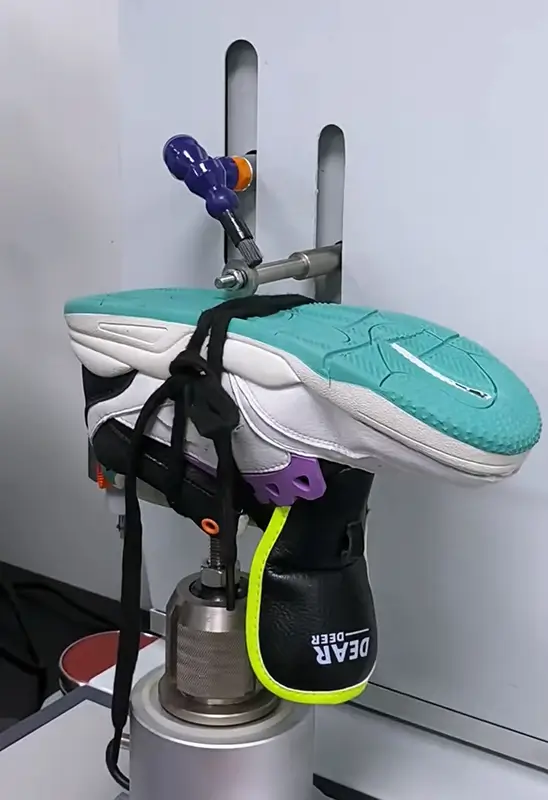
Physical performance standards
To evaluate shoe durability, safety, and performance, common physical performance tests include:
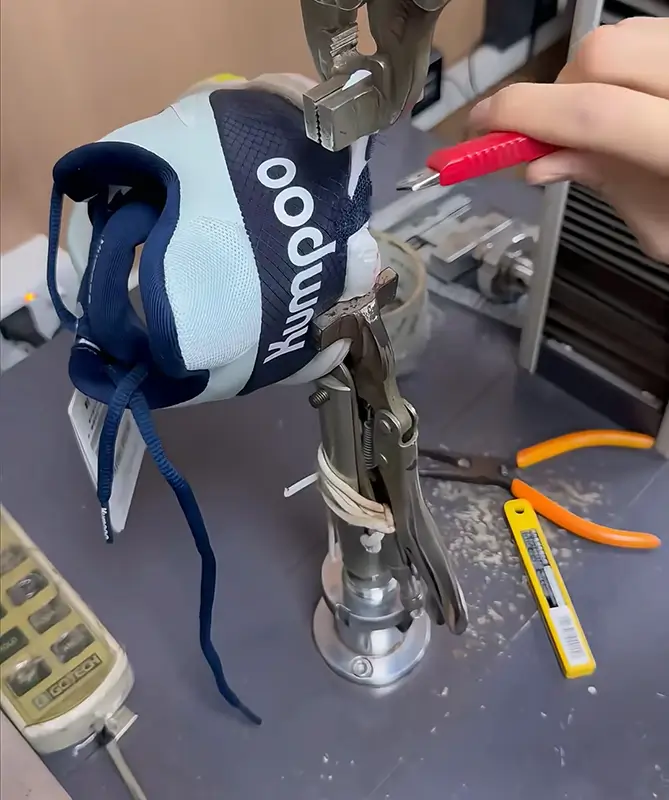
- Bonding strength test: Measures the adhesion strength between the sole and upper to prevent separation during use.
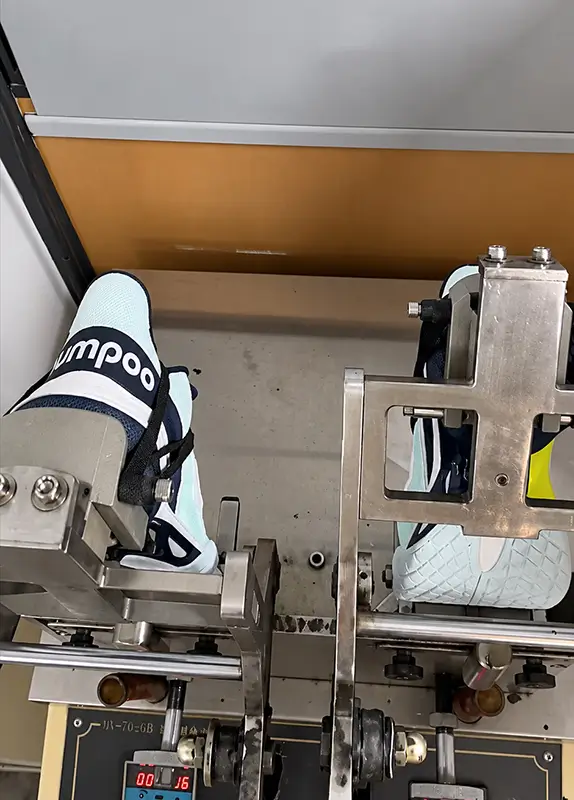
- Flexing test: Simulates repeated bending during daily wear to check whether the sole or upper develops cracks or other damage.
- Abrasion resistance test: Evaluates outsole wear resistance to ensure durability during daily use.
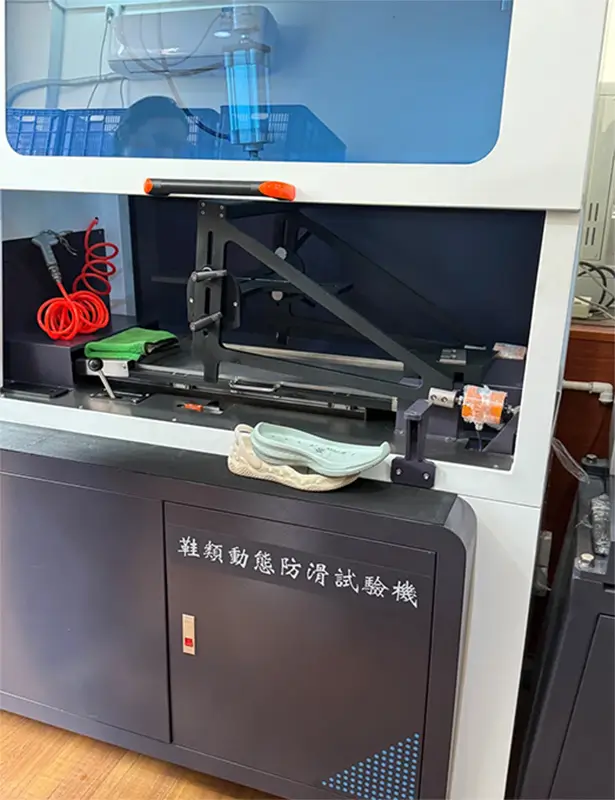
- Slip resistance test: Evaluates outsole grip performance to help reduce slip risks during use.
These tests are usually performed in large shoe factories’ in-house labs or conducted by third-party laboratories when required by clients.
Safety & compliance requirements
EU market
- REACH regulation: Restricts certain chemicals in footwear materials and components, such as some heavy metals and phthalates.
- For safety shoes classified as personal protective equipment (PPE), products need to comply with relevant PPE requirements and obtain CE marking.
The US market mainly focuses on children’s product safety and restrictions on certain chemicals. For example, children’s footwear needs to comply with relevant CPSIA safety requirements and provide a CPC (Children’s Product Certificate) after passing the required tests.
How does shoe QC actually work in China?
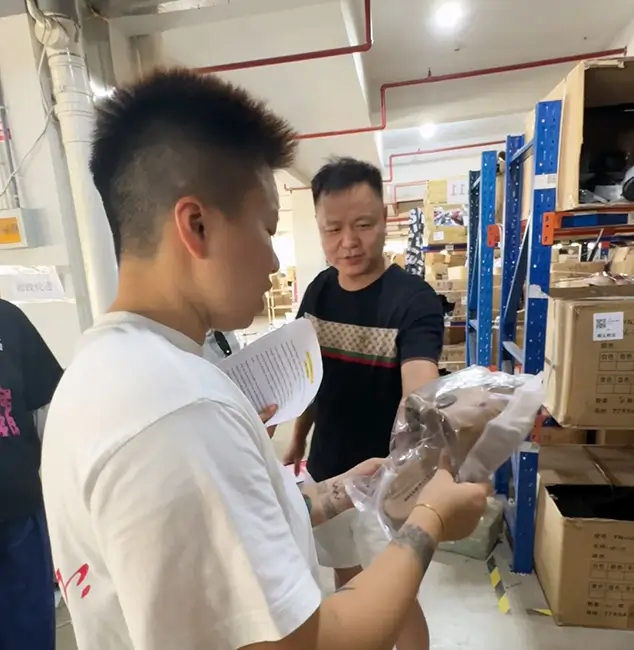
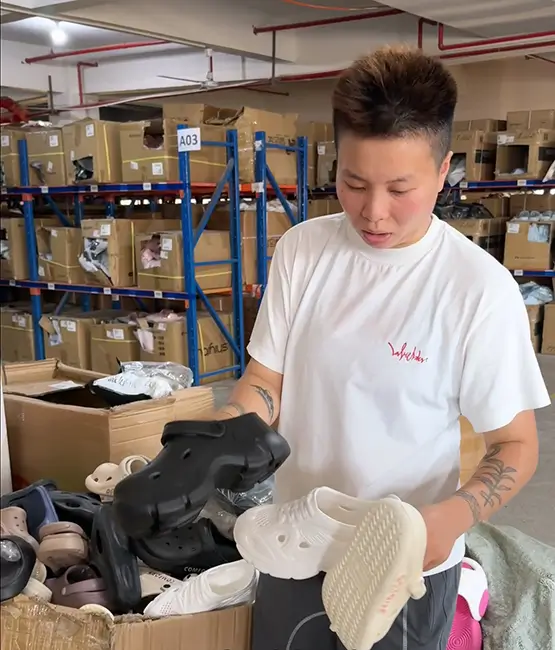
For ready-stock purchases, experienced buyers usually work with third-party inspection companies or sourcing agents to conduct AQL sampling inspections before shipping from China. In our experience, about one-third of our sneaker clients purchase ready stock, and we mainly check areas like stitching, sole bonding, glue marks, scratches, and symmetry.
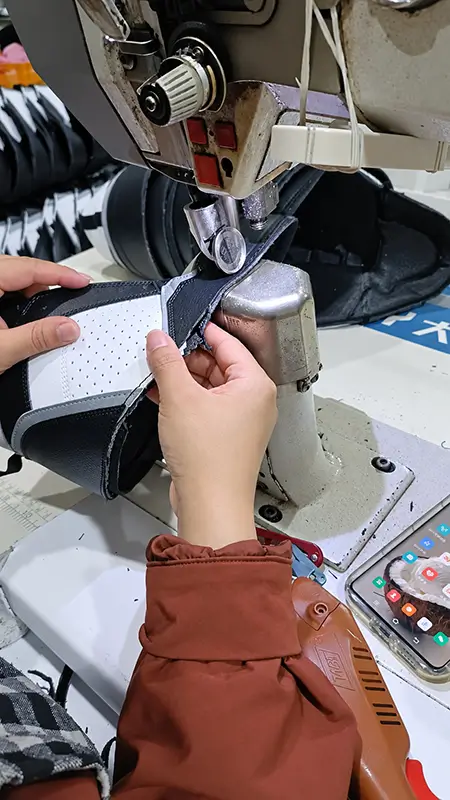
For custom footwear orders with strict quality requirements, it’s common to conduct in-process inspections at the factory in addition to final inspection. Checking areas like upper stitching, measurements, and sole bonding helps identify problems early, avoiding delays and expensive rework after the entire batch is completed.
Large footwear factories usually have more established QC processes, while QC performance at small factories varies from one factory to another. Therefore, for custom orders or projects with strict quality requirements, buyers often arrange independent, impartial inspections to control shoe quality.
What to check and common shoe defects?
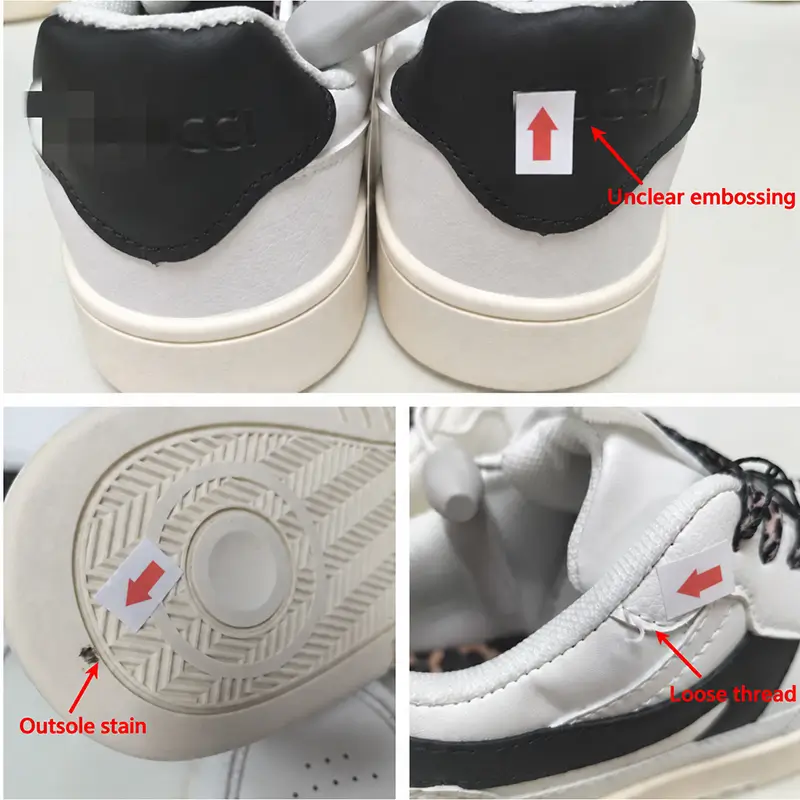
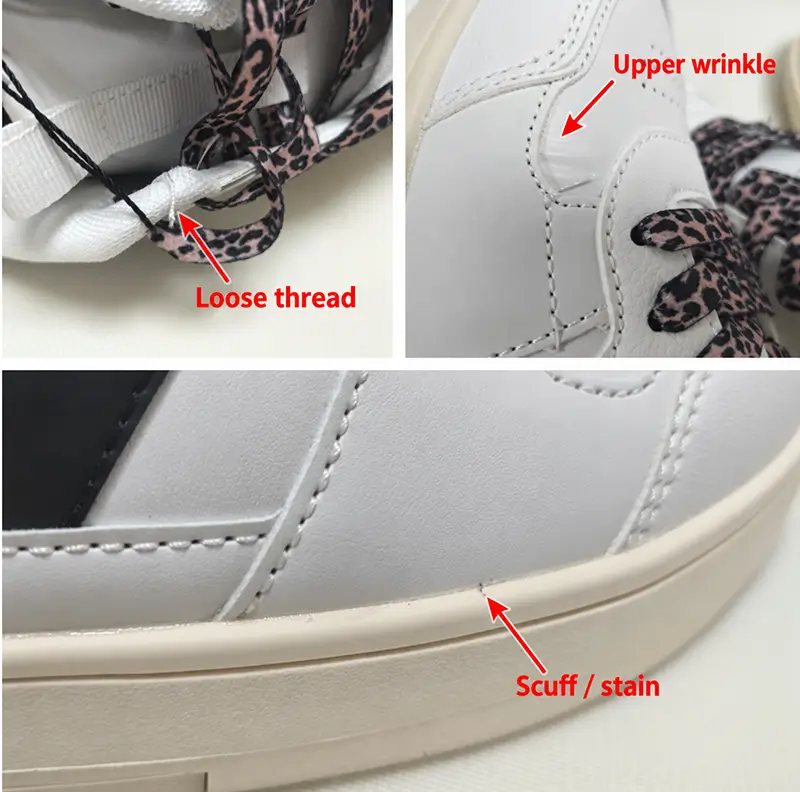
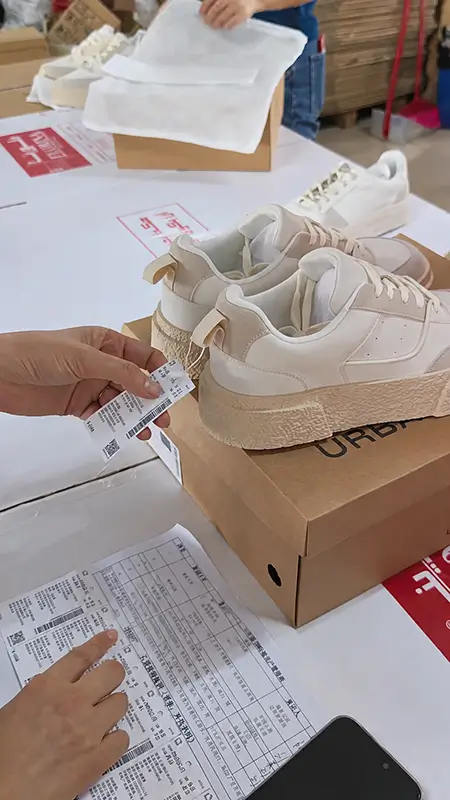
Shoe inspections are usually checklist-based. Inspectors record any issues found on site, take photos, and then prepare a QC report with a pass/fail result for your reference.
The exact checklist varies by shoe type, material, and specific quality requirements. However, most inspections generally cover the following key areas and record common defects found during inspection.
Appearance
Check whether the shoes match the approved PP sample, including:
- Left-right symmetry and overall shoe shape
- Stains, scratches, color differences, and loose threads
- Stitching quality, glue marks, and excess glue
- Upper and outsole color, finish, and texture
- Shoelaces, zippers, metal buckles, and Velcro
Material
Check whether the materials used for the upper, outsole, insole, and other parts match the approved sample/product specs, including material type, thickness, hardness, and feel.
Note: Common upper materials include mesh, knitted fabric, PU, and synthetic leather. Outsoles are commonly made from EVA, rubber, or Phylon, while insoles often use foam or textile materials.
Size
Check shoe length, width, toe height, and heel height against the size specs and ensure they are within the acceptable tolerance range.
Function, bonding & comfort
- Check the outsole’s basic slip resistance, sole-to-upper bonding, and any issues such as sole separation. Also check whether zippers, buckles, and other components are secure and function properly.
- Check whether the inside of the shoe is smooth and free from wrinkles, hard spots, glue residue, or other issues that may affect comfort. A basic fitting check can be performed when necessary.
Branding & packaging
- Logo position, size, and printing/embroidery quality
- Size labels match the required market formats
- Barcode, hangtags, dust bags, shoe boxes, and outer carton markings are complete and accurate
Who can handle shoe quality control effectively?
Large footwear brands like Adidas usually have their own in-house quality control teams. For most small and medium-sized buyers, a more common approach is to outsource quality inspections.
Inspection companies
There are many third-party inspection companies in China, typically charging around $200–300 per inspector per day.
Most third-party inspectors follow a fixed workflow and conduct inspections based on your confirmed checklist. This works for standard inspections. But it’s harder for them to identify issues beyond the checklist.
If the inspection fails, you’ll need to contact the supplier yourself to negotiate rework or compensation. If you need a re-inspection, you’ll have to pay again.
China Product Agent
For in-depth or flexible inspection solutions, work with China Product Agent.
- $150 per inspector per day.
- Familiar with common shoe materials and production, China Product Agent’s inspectors check shoes not only based on buyers’ requirements but also consider how the products will be used, helping identify potential issues beyond the checklist.
- If issues are found during inspection, we can communicate with you in real time through WhatsApp video calls and work directly with the factory to resolve them, rather than simply providing a pass/fail report.